
E-Invoicing for Free Zone Companies in UAE
Let’s explore what this transformation holds for your business.
Home » E-Invoicing for Free Zone Companies in UAE
E Invoicing for Free Zone Companies in UAE
A free zone licence determines where a business is established and which activities it may carry out. It does not, by itself, remove the business from the UAE Electronic Invoicing System. A company selling goods or services to another business may still need to issue structured invoice data through the approved network according to its implementation phase.
A free zone manufacturer may sell goods locally and overseas. A consultancy may serve mainland and foreign clients. A logistics business may invoice transport, handling and storage separately. Each flow needs the correct customer details, tax treatment and invoice data before it can be automated.
E Invoicing for Free Zone Companies therefore involves processes beyond connecting accounting software to a service provider. The company must understand which transactions are covered, where its data comes from and how electronic invoices will remain connected with contracts, customs records, delivery documents and VAT reporting.
What Is E Invoicing for Free Zone Companies?
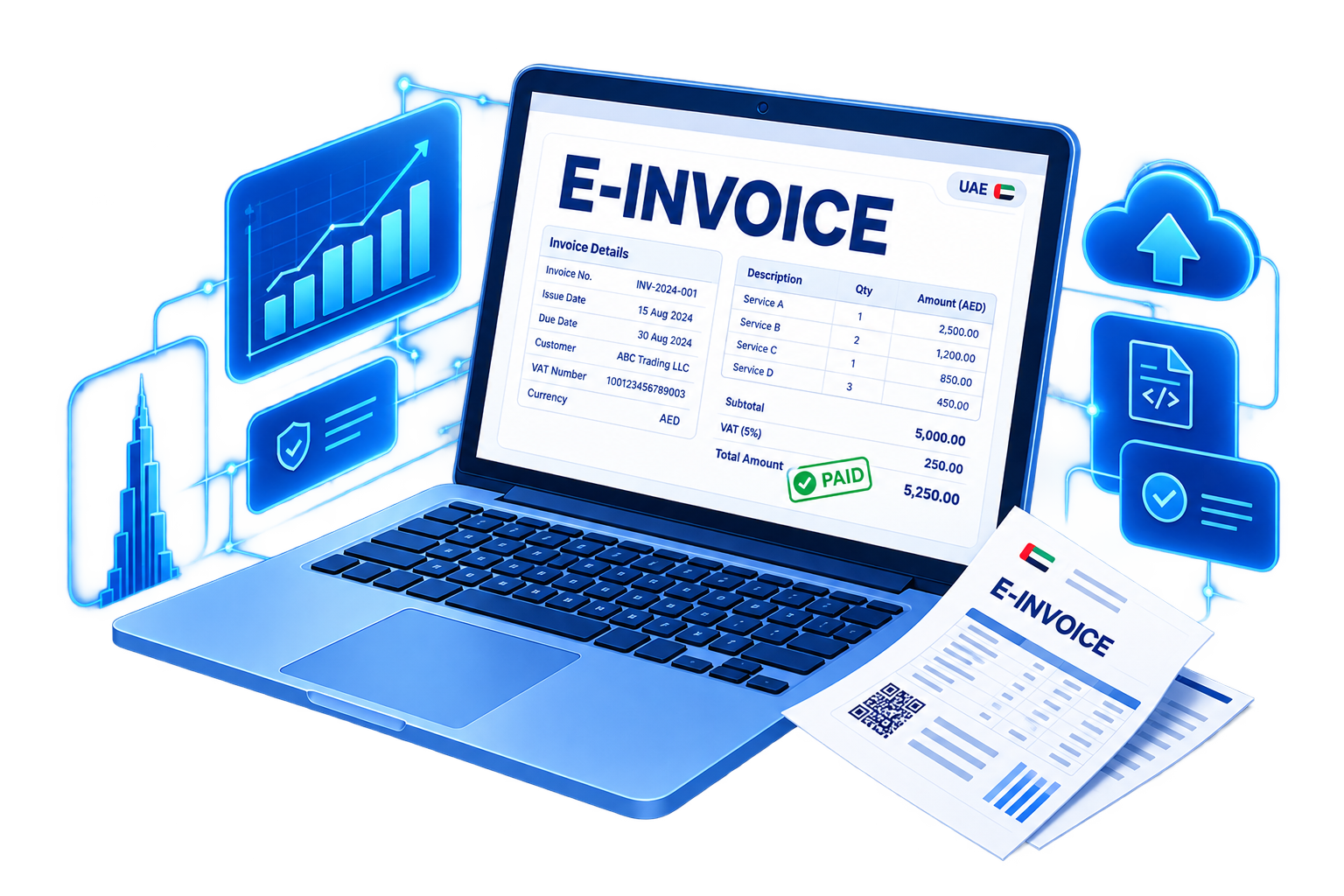
E-invoicing is the creation, exchange and reporting of invoice and credit-note data in a structured electronic format. The format allows the sender’s and recipient’s systems to process the information automatically. A PDF, scanned invoice, spreadsheet or document attached to an email does not qualify merely because it is digital.
Under the UAE model, a supplier generates invoice data through its accounting, ERP or billing system. Its Accredited Service Provider validates and transmits the data to the customer’s provider. The information required for tax reporting is also shared with the Federal Tax Authority through the prescribed process.
FTA Compliant Solutions
End-to-End Support
Seamless Integration
Secure & Reliable
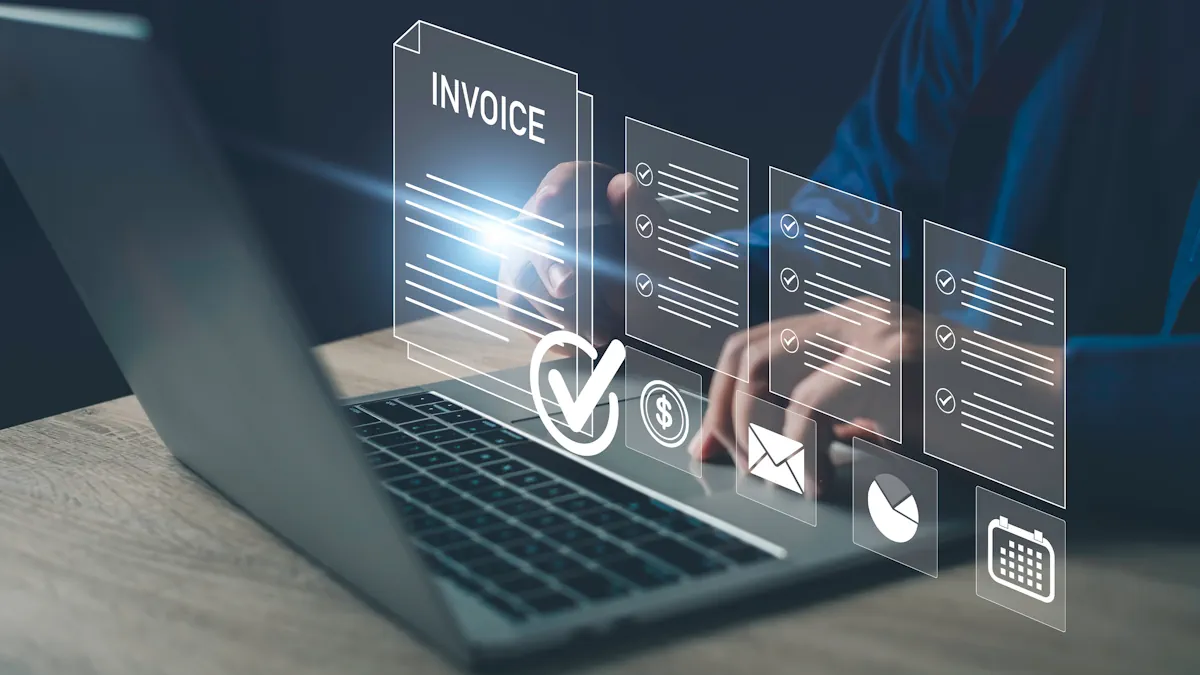
For free zone businesses, the invoice may relate to a mainland sale, a supply to another free zone entity, an export, an imported service or a recurring contract. Free Zone E Invoicing should preserve the commercial facts of each transaction while presenting them in the structured format required by the UAE framework.
The electronic invoice remains part of the company’s wider records. Contracts, purchase orders, proof of delivery, customs declarations, shipping documents and payment records may still be needed to support the transaction and its VAT treatment.
Does E-Invoicing Apply to UAE Free Zone Companies?
The UAE framework applies to persons conducting business in the country in relation to covered business-to-business and business-to-government transactions, subject to the exclusions stated in the legislation. A company should not assume that its free zone status, corporate tax position or eligibility for a 0% corporate tax rate places all of its invoices outside the system.
VAT registration is another separate consideration. A business can be within an e-invoicing implementation phase even when a particular supply is zero-rated, exempt or outside the scope of VAT. The tax category affects the data reported on the document; it does not automatically decide whether structured invoicing applies.
The same care is required for designated zones. Under UAE VAT rules, a designated zone is treated as being outside the country only for specified supplies and only when the relevant conditions are met. It is not treated as a foreign jurisdiction for every purpose. Services supplied from a designated zone, for example, generally require a different analysis from qualifying movements of goods.
UAE Free Zone E Invoicing should therefore begin with the legal entity and transaction rather than the name of the zone. The company needs to identify who supplies whom, what is supplied, where the goods move or the service is used, and which tax evidence supports the treatment.
Our Services
Comprehensive E-Invoicing Services in UAE
Over 55 countries have already adopted such systems. The UAE is simply catching up to global best practice.
How Does E-Invoicing Work for Free Zone Businesses?
The process starts when a transaction becomes ready for billing. The company’s system gathers the supplier, customer, invoice and line-item information required by the UAE data standard. This may include tax identifiers, addresses, invoice dates, currency, quantities, values, VAT categories and references to an earlier invoice or credit note.
The structured data is sent to the supplier’s Accredited Service Provider. The provider performs the required validations and exchanges the document through the approved network. The recipient receives data that its own system can process, while the prescribed information is reported to the FTA.
- A normal workflow may follow these stages:
- The sales or operations team confirms that goods were delivered or services were completed.
- Finance checks the customer, contract, price, currency and VAT treatment.
- The accounting system creates the invoice data.
- The Accredited Service Provider validates and transmits the electronic invoice.
- Any rejection or validation message returns for correction.
- The accepted document is recorded and reconciled with the ledger and customer balance.
For E Invoicing Free Zone implementation, this workflow may need information from several systems. Integration must allow the necessary fields to be combined without the need for employees to enter the same information multiple times.
Credit notes must also move along a defined route. Returns, cancellations of services, differences in pricing, and discounts being offered post sale may call for specific electronic credit notes that are linked to the originals of the invoices. The adjustment should agree with the physical return, customer communication and accounting entry.
Our Simple 5-Step E-Invoicing Process
UAE E-Invoicing Requirements for Free Zone Companies
The UAE is introducing mandatory e-invoicing in phases. Businesses with annual revenue of AED 50 million or more are required to implement the system from 1 January 2027. The amended deadline for this category to appoint an Accredited Service Provider is 30 October 2026.
Businesses with annual revenue below AED 50 million are scheduled to appoint a provider by 31 March 2027 and implement e-invoicing from 1 July 2027. The company should verify its relevant revenue, legal structure and implementation category against the current decisions and Ministry of Finance guidance.
Accredited Service Provider
The business must work with a provider accredited by the Ministry of Finance for the UAE system. Commercial terms matter, along with system compatibility, security, transaction capacity, technical support and experience with the company’s accounting platform.
Mandatory Invoice Data
Issuance and Transmission
Record Retention
The company should retain electronic invoice data and supporting records according to UAE requirements. A clear audit trail should connect the structured document with the accounting entry, VAT return and commercial evidence.
Data Security and Access
System roles should identify who may create, approve, correct and transmit an invoice. The business should also understand how its provider protects credentials, invoice data and integration channels. Businesses seeking E Invoicing Services for Free Zone Companies should review these requirements before selecting software. A system demonstration has limited value if it does not use the business’s actual transaction types and data fields.
Industries Specific E-Invoicing Solutions
E-Invoicing Solutions for Every Industry
Your Trusted Advisor for Long-Term Success.
Free Zone Companies and UAE E-Invoicing Compliance
Free zone compliance becomes more complex when one company handles several sales routes. The same item may be sold to a mainland customer, transferred to another zone, exported outside the UAE or supplied through an agent. The invoice process should distinguish these flows rather than applying one tax code to every sale.
Customer records are a common starting point. Legal names, licence details, billing addresses and tax registration numbers may be incomplete or duplicated. A customer may also have several branches or delivery sites while invoices must be addressed to one legal entity. Cleaning this information before integration reduces rejections later.
Product and service records need similar attention. Descriptions should be understandable, units of measure should be consistent and VAT codes should reflect the actual transaction. A broad label such as “service charges” may be convenient internally yet provide too little information for the customer or tax record.
Currency handling is also important for firms that invoice international customers. The system should preserve the transaction currency and calculate any UAE VAT amounts using the required exchange-rate rules. Credit notes should follow the same basis as the invoice they adjust.
For businesses comparing E Invoicing for Free Zone Dubai support, the provider should be able to trace a sample transaction from order to invoice, ledger and VAT return. This reveals whether the proposed solution fits the existing process or merely produces a correctly formatted output.
Which Free Zone Businesses Need E-Invoicing?
The requirement can affect many types of free zone entities carrying out covered B2B or B2G transactions. These include trading firms, manufacturers, professional consultancies, technology companies, logistics providers, media businesses, holding structures with chargeable services and companies operating from financial free zones.
A company’s size or industry does not determine the answer on its own. The business should consider whether it conducts business in the UAE, the nature of its transactions, any applicable exclusion and the implementation date assigned to its revenue category.
Businesses selling only to consumers require separate analysis because the UAE e-invoicing scope and exclusions distinguish consumer transactions from B2B and B2G supplies. A mixed business may therefore need to classify customers correctly before deciding which sales flow enters the system.
Group structures also need attention. Several entities may share a brand, finance team or ERP while remaining separate legal persons. Intercompany management charges, rent, staff recharges and shared-service fees should identify the correct supplier and recipient. Transactions within a VAT group require review under the specific tax and e-invoicing rules rather than being treated like ordinary third-party sales.
For a company searching for E Invoicing for Free Zone Companies UAE, the first step is a scope assessment. It should list legal entities, licences, revenue, VAT registrations, customer categories, sales routes and existing billing systems. This provides a more reliable answer than classifying the entire group by its office location.
100% FTA Compliant
End-to-End Solutions
Industry Experts
Secure & Reliable
Timely Support
Ready to Get E-Invoicing Compliant in UAE?
E-Invoicing for VAT-Registered Free Zone Companies
VAT-registered entities already issue tax invoices and credit notes, maintain records and report supplies through periodic VAT returns. E-invoicing changes how covered invoice data is created, exchanged and reported. It also makes the quality of accounting master data more visible because incorrect details can affect both the customer document and tax reporting.
The VAT treatment should be determined before the invoice reaches the Accredited Service Provider. The provider can validate whether required fields are present, while the business remains responsible for deciding whether a supply is standard-rated, zero-rated, exempt or outside the scope.
This is particularly relevant to E Invoicing for Free Zone transactions involving goods. The company may need customs declarations, proof of movement, evidence of export and records showing where goods were located at the time of supply. If the conditions for a particular VAT treatment are not supported, a technically valid electronic invoice will not correct the underlying tax position.
Input and output records should also reconcile. Sales totals from the e-invoicing system should agree with the general ledger and relevant VAT return boxes. Differences caused by rejected invoices, cut-off timing, foreign currency conversion or late credit notes should be investigated and documented.
E Invoicing for Free Zone Companies Dubai may also involve more than one operating location. An organization can obtain a free zone license while still operating warehouses, divisions or project locations in different areas. The system structure should be able to record the vendor and establishment particulars as well as the information regarding the operations conducted in various locations.
SS & Co. Global provides E Invoicing services to free zone companies in UAE through transaction mapping, VAT treatment evaluation, data-field verifications, reconciling, and readiness for implementation. Contact NOW.
Frequently Asked Questions?
Related Insights
UAE e-Invoicing Timeline Updated: ASP Appointment Extended, 2027 Rollout Remains
The e-invoicing UAE timeline has been modified, but the important 2027 deadline is still in place. On 10th May…
UAE Launches E-Invoicing Pilot Phase: What Businesses Need to Know
The UAE has officially entered a new phase of digital tax compliance with the launch of its e-invoicing pilot…

Which is the best e invoicing software in UAE?
The UAE government, since past decade, is making efforts to build a structured system for running businesses. That is…