
E-Invoicing Solutions for FMCG Companies in UAE
Let’s explore what this transformation holds for your business.
Home » E-Invoicing Solutions for FMCG Companies in UAE
E Invoicing Solutions for FMCG Companies in UAE
An FMCG invoice may represent hundreds of product lines moving through a supply chain. Each invoice should show the correct quantities, pack sizes, prices, discounts, free items and VAT amounts. Short deliveries, returns or damaged goods may later require a credit note or another adjustment.
E Invoicing for FMCG Companies in UAE brings the final invoice data into a structured electronic process. Businesses covered by the UAE system will exchange electronic invoices and credit notes through an Accredited Service Provider, with the required information reported to the Federal Tax Authority. Preparation must account for the speed and volume of the sector as well as the commercial arrangements behind each sale.
SS & Co. Global connects sales, distribution, inventory, accounting and VAT information so the electronic record matches with the approved transaction.
What Is E-Invoicing for FMCG Businesses?
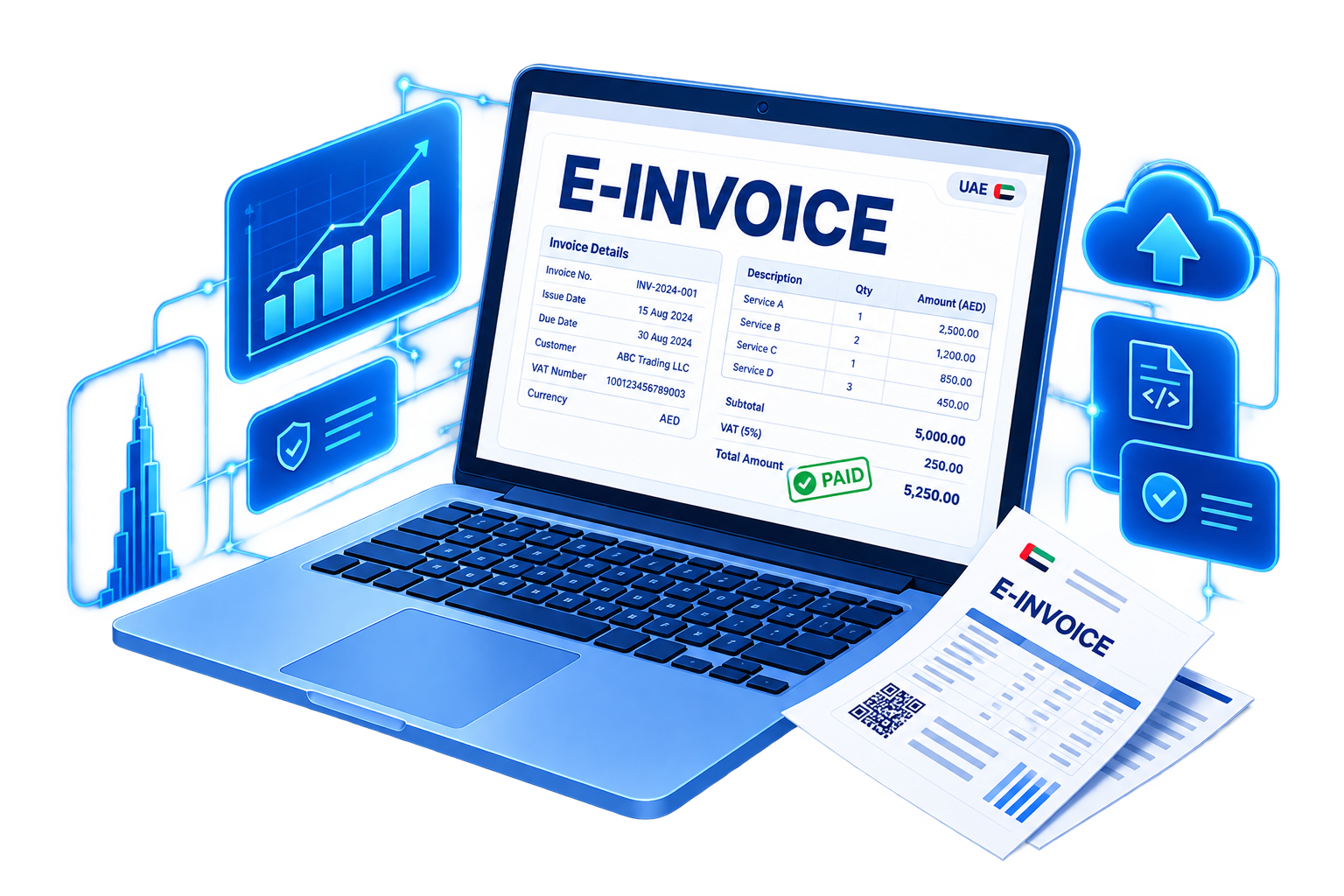
An e-invoice is invoice data issued, transmitted and received in a structured electronic format that allows automatic processing. A PDF, spreadsheet, image, scanned invoice or email attachment does not qualify as an e-invoice by itself. A readable document may still support business communication, while the prescribed data must be exchanged through the UAE framework.
FTA Compliant Solutions
End-to-End Support
Seamless Integration
Secure & Reliable
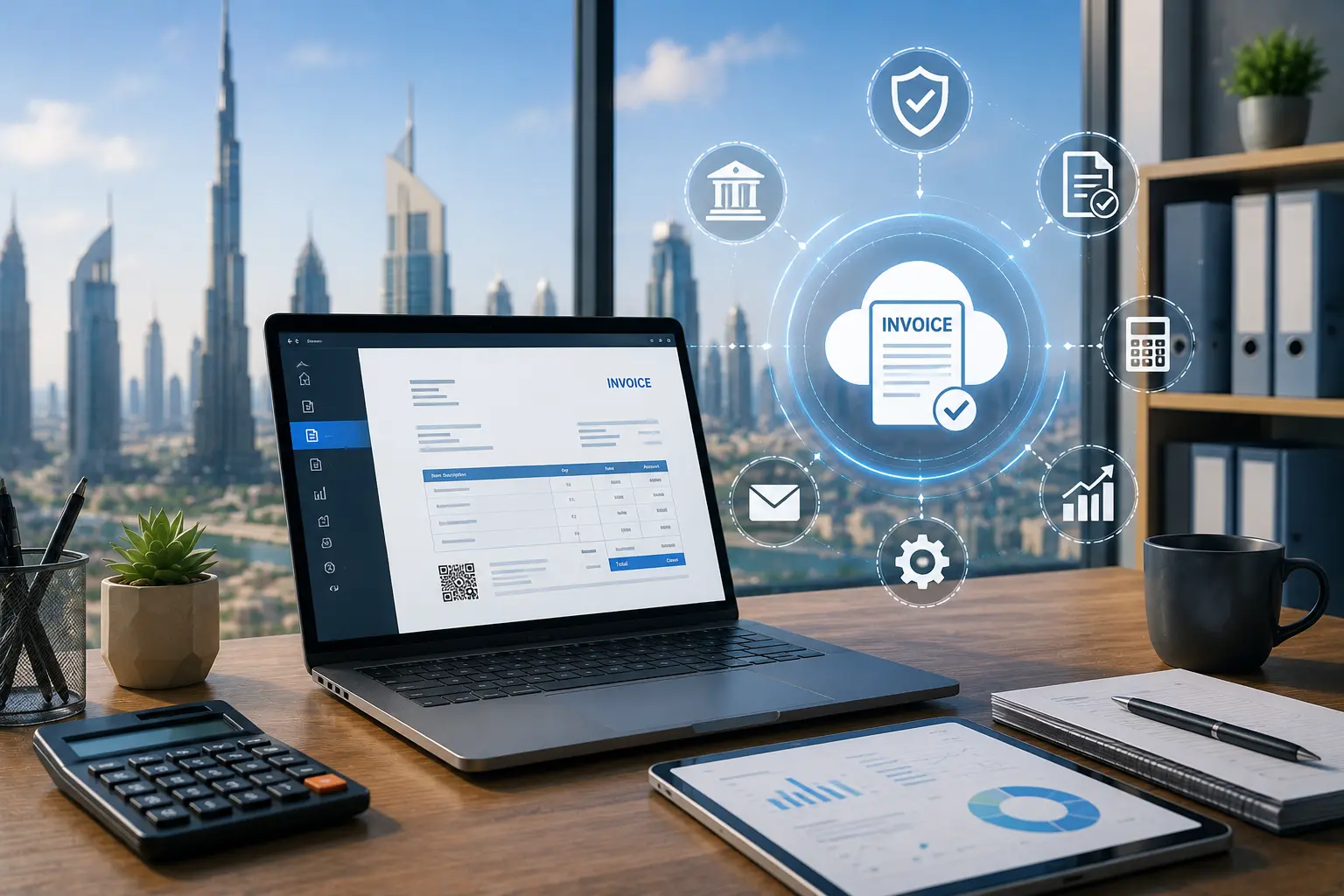
In the FMCG sector, the invoice often begins with a customer order and delivery. The final record may include product codes, units, quantities, prices, line discounts, promotional allowances and VAT. It may also refer to a purchase order, delivery note, route, store or distribution location.
FMCG E Invoicing requires these details to come from controlled sources. Customer information may sit in the accounting system, product data in an inventory application and promotion terms in a sales platform. The implementation should identify which system owns each field and when the transaction becomes ready for invoicing.
Orders, delivery notes, rebate agreements and return records still explain how the amount was calculated and support any dispute over quantity, price or discount.
Why Is E Invoicing Important for FMCG Companies?
FMCG businesses handle frequent orders, large catalogues and short delivery cycles. A consistent electronic format moves approved data between supplier and buyer systems.
Faster Invoice Processing
With structured data available, there is less need to re-type, while customer, order and delivery numbers then direct the invoice to the correct account.
Better Product-Level Accuracy
Standard product codes, descriptions, pack sizes and units of measure reduce confusion between individual items, cartons, cases and promotional packs. The invoice should reflect the unit used in the approved order and delivery record.
Clearer Handling of Discounts and Promotions
Stronger Sales and VAT Reconciliations
More Traceable Credit Notes
Short deliveries, rejected goods, product damage and returns are common in distribution. Electronic credit notes connect the approved adjustment with the earlier invoice and give both parties a consistent record of the reduction. These benefits depend on correct master data and commercial approvals. Companies remain responsible for the transaction and tax treatment transmitted through their systems.
Our Services
Comprehensive E-Invoicing Services in UAE
Over 55 countries have already adopted such systems. The UAE is simply catching up to global best practice.
How Does E Invoicing Work for FMCG Businesses in the UAE?
The process starts within the business. A customer order is approved, stock is allocated and the goods are dispatched. Once the invoicing conditions are met, the accounting or enterprise system prepares the required structured data and sends it through the appointed Accredited Service Provider.
The provider validates and exchanges the information. The customer receives the record, the required data is reported to the FTA and a status returns to the supplier.
- For E Invoicing FMCG, the internal flow commonly covers:
- Confirming the customer, delivery location and purchase-order details.
- Drawing product descriptions, quantities and units from approved master data.
- Applying authorized prices, discounts and promotion terms.
- Confirming delivery and the appropriate VAT treatment.
- Creating and transmitting the structured invoice.
- Recording the response and assigning rejected transactions for correction.
Distributors, wholesalers and retailers must receive structured invoices, match them with orders and goods receipts and post them to the correct supplier account. Mismatches need a defined owner.
When goods are returned, the warehouse team should check what came back and why. Once the return is approved, finance issues the electronic credit note, connects it with the original invoice and updates the customer and inventory records.
Our Simple 5-Step E-Invoicing Process
UAE E-Invoicing Requirements for FMCG Companies
- Implementation is being introduced in phases based on revenue:
- A person with annual revenue above AED 50 million must appoint an Accredited Service Provider by 30 October 2026 and implement the system by 1 January 2027.
- A person with annual revenue below AED 50 million must appoint a provider by 31 March 2027 and implement the system by 1 July 2027.
- Government entities must appoint a provider by 31 March 2027 and implement the system by 1 October 2027.
Business-to-consumer transactions currently remain outside mandatory implementation until a later decision. This point is particularly relevant to FMCG retailers. Consumer checkout sales may fall outside the present requirement, while purchases from suppliers and any business-to-business sales still need to be assessed separately.
Electronic invoices and credit notes must contain the prescribed fields and be transmitted within the applicable timeline. Associated information must be stored in the UAE. System failures must be reported to the Authority within two business days through the specified mechanism.
An FMCG E Invoicing UAE readiness review should therefore cover legal entities, revenue thresholds, transaction types, provider appointment, software integration and data storage. The business also needs an incident procedure explaining who monitors transmission, reports system failure and handles documents waiting to be sent.
Industries Specific E-Invoicing Solutions
E-Invoicing Solutions for Every Industry
Your Trusted Advisor for Long-Term Success.
Who Needs E-Invoicing in the FMCG Sector?
The sector includes food, beverage, personal-care, household-product and consumer-health businesses, along with importers, brand owners, distributors, wholesalers and retailers.
E Invoicing for FMCG Companies applies according to the person and transaction covered by the UAE framework. Manufacturers may invoice distributors, distributors may supply supermarkets and wholesalers may sell to smaller business customers. Each legal entity should determine its implementation date and transaction scope.
Groups using one system should keep each legal person identifiable through its accounts, tax registration number, invoice sequence, access and provider onboarding.
Businesses looking for E Invoicing for FMCG Companies Dubai should include warehouses, branches and delivery operations in other emirates where they belong to the same implementation scope. The assessment follows the legal entity and business transaction rather than the location of one sales office.
E-Invoicing for FMCG Manufacturers and Suppliers
Reliable product master data is essential for manufacturers and suppliers alike. A consistent code, description, unit of measure and tax classification can be attributed to every SKU. Any new packaging size, seasonal bundle or promotional product needs to be set up before it shows up on customer invoices.
Pricing may differ by customer, channel or contract. The system should use approved price lists and flag orders where the purchase order conflicts with the supplier’s price or pack configuration.
Free goods require review because promotions such as “buy ten, receive one free” can have commercial and VAT effects. The invoice and promotion records should follow the approved treatment.
Under E Invoicing for FMCG in UAE, batch and expiry details may remain in inventory records even where they are not invoice fields. A transaction reference should connect the invoice with those records when required.
An implementation specialist can help map these scenarios before the software is configured. Testing should include normal sales, promotional orders, samples, free goods, returns, price corrections and rejected transmissions.
E-Invoicing for FMCG Distributors and Wholesalers
Distributors process orders across stores, routes and sales representatives. The invoicing trigger may be dispatch, delivery confirmation or a route-sales transaction and should agree with the approved accounting and tax process.
E Invoicing Solutions for FMCG distributors should manage customer-specific references and product detail without slowing down dispatch. Store codes, purchase orders, delivery locations and route information need consistent use so invoices reach the correct accounts-payable process.
Incoming invoices from manufacturers and logistics suppliers should be matched with orders, goods receipts and approved charges. Quantity differences, damage and price disputes require an exception process.
For rebates and promotional support, the business should determine whether the amount changes the original consideration, represents a separate Service or needs another accounting treatment.
Businesses considering FMCG E Invoicing Dubai should test peak sales periods and large customer files. A process that works for a few invoices must also handle the actual daily volume without delaying delivery, billing or collection.
E-Invoicing for FMCG Retail Businesses
Retailers may also make business-to-business sales, including bulk supplies to offices or hospitality businesses. E Invoicing for FMCG Companies UAE should assess these transactions separately from consumer sales.
Supplier deductions also need governance. Listing fees, promotional contributions, shortage claims and penalties may arise under separate agreements. Purchasing and finance should determine how each item is documented before it is netted against a supplier balance.
For E Invoicing for FMCG Companies in UAE, retailers should involve procurement, warehouse operations, store receiving and finance in testing. Each team controls information that affects whether an invoice can be matched, approved and paid.
100% FTA Compliant
End-to-End Solutions
Industry Experts
Secure & Reliable
Timely Support
Ready to Get E-Invoicing Compliant in UAE?
Managing High-Volume FMCG Invoices With E-Invoicing
High volume may make small data errors costly. A wrong unit of measure or tax code repeated across thousands of lines can create widespread corrections. Controls should therefore begin with customer, supplier and product master data. The system should validate required fields and restrict price, discount and tax changes. Rejection messages should reach a responsible employee. Daily monitoring can compare created, accepted, rejected and pending invoices.
Performance testing should include large invoices, simultaneous warehouse transmissions and month-end volumes. Accepted records should post correctly to the ledger and customer account. When choosing a provider, FMCG firms should examine transaction capacity, integration options, response times, data security and user support. The best provider is the one that meets the UAE requirements and works with the company’s operational systems. A top market profile does not replace testing with realistic data.
SS & Co. Global supports businesses with transaction mapping, VAT review, data-field assessment, provider requirements and implementation testing. Our work on E Invoicing FMCG focuses on the way products, discounts, returns and credit notes move through the company’s actual records.
Frequently Asked Questions?
Related Insights
UAE e-Invoicing Timeline Updated: ASP Appointment Extended, 2027 Rollout Remains
The e-invoicing UAE timeline has been modified, but the important 2027 deadline is still in place. On 10th May…
UAE Launches E-Invoicing Pilot Phase: What Businesses Need to Know
The UAE has officially entered a new phase of digital tax compliance with the launch of its e-invoicing pilot…
Which is the best e invoicing software in UAE?
The UAE government, since past decade, is making efforts to build a structured system for running businesses. That is…